- During the UK’s 1970s stagflation era, gold soared as inflation skyrocketed (reaching over 25%) and economic growth stalled. Rising oil prices, which tripled during the 1970s, and rising wages were the main inflation culprits.
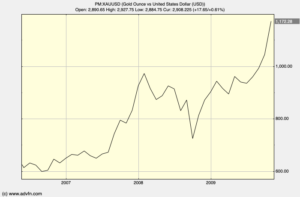
- The 2008 financial crisis saw gold surge as markets collapsed and central banks flooded the system with liquidity. Lasting from December 2007 to June 2009, the period also known as the Great Recession saw the precious metal rise around 50% in dollar terms.
- Pandemic-driven uncertainty and the rise of government debt in 2020 reinforced gold’s role as a stabilising asset; the metal rose significantly as fiscal stimulus packages were revealed. August of the same year saw global demand for gold spike, and the price hit a record high of £1,550 per troy ounce ($2,030). The Royal Mint reported that gold was the best performer of the three asset classes (stocks, bonds and gold) in 2020.
- Currency devaluation
- Gold as part of a diversified portfolio
- A tangible asset with intrinsic value