




Britain has one of the richest histories of gold coinage in the world. From medieval sovereigns to modern Royal Mint masterpieces, British gold coins have long represented wealth, prestige and national identity. But which have proved the most successful, and what makes certain coins so desirable?
For centuries, British gold coins have been treasured for far more than their precious metal content. Their historical significance, artistic craftsmanship and, in some cases, extraordinary rarity have helped establish them as some of the most sought-after coins among collectors worldwide.
While familiar bullion coins such as the Sovereign and Britannia remain popular choices for those purchasing physical gold, exceptional examples of historic British coinage have achieved remarkable prices at auction.
At Solomon Global, we explore some of Britain's most successful gold coins, examining their historical importance, popularity and the extraordinary sums collectors have been willing to pay.
1. The 1937 Edward VIII Sovereign: The Coin That Never Was
Notable sale: £1 million (2020)
Few British coins have a story quite as remarkable as the 1937 Edward VIII Sovereign.
Following the death of George V in January 1936, Edward VIII ascended the throne. However, his reign lasted less than a year, ending with his abdication in December 1936 following the constitutional crisis surrounding his proposed marriage to Wallis Simpson.
Although preparations for his coinage were underway, Edward abdicated before the coins entered general circulation.
Only a handful of trial and proof Sovereigns were produced, making them exceptionally rare.
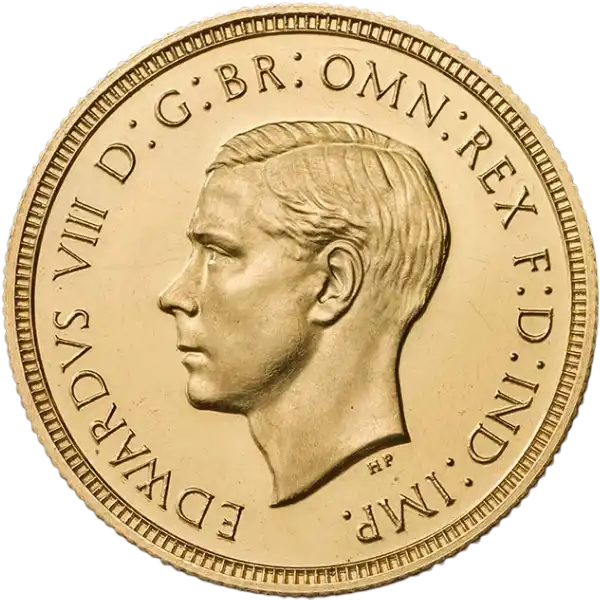
In January 2020, The Royal Mint arranged the private sale of an Edward VIII Sovereign for £1 million, establishing a record for a British coin at the time.
The coin's extraordinary value reflects several factors: its rarity, its association with one of the most significant constitutional events in modern British history, and the enduring fascination surrounding Edward VIII.
Interestingly, the coin also breaks a centuries-old tradition. British monarchs traditionally face the opposite direction to their predecessors on coinage, but Edward insisted on being depicted facing left, the same direction as his father.
For collectors, the Edward VIII Sovereign represents an almost unique combination of royal history, scarcity and numismatic significance.
2. The 1839 Una and the Lion: A Masterpiece of British Coin Design
Record auction sale: $1.44 million (2021)
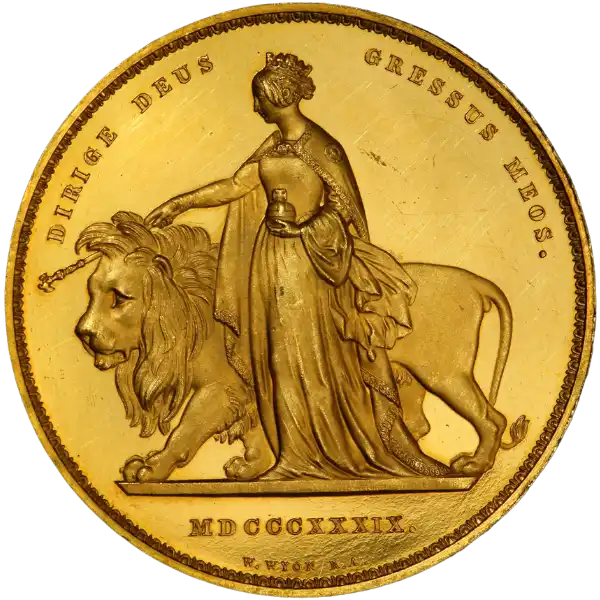
Widely regarded as one of the most beautiful British coins ever produced, the 1839 Una and the Lion gold five-pound piece is a masterpiece of nineteenth-century engraving.
Designed by William Wyon during the early reign of Queen Victoria, the coin depicts the young monarch as Una, a character from Edmund Spenser's The Faerie Queene, guiding a lion representing Britain.
The design symbolises wisdom, strength and the relationship between the monarchy and the nation.
Its artistic significance, combined with its rarity, has made the original 1839 issue one of the most desirable coins in British numismatics.
In August 2021, an exceptionally preserved example achieved $1.44 million at Heritage Auctions.
Certified by Numismatic Guaranty Company (NGC) as PF 66★ Ultra Cameo, the coin exceeded its pre-auction estimate and surpassed the previous record for an Una and the Lion.
The result demonstrates how exceptional condition can dramatically influence the value of rare coins. Two examples of the same historic issue can command substantially different prices depending on their preservation, appearance and certification.
The Una and the Lion design has subsequently been revisited by The Royal Mint, introducing its imagery to new generations of collectors.
Its continued popularity illustrates how exceptional British coin designs can maintain their appeal long after their original release.
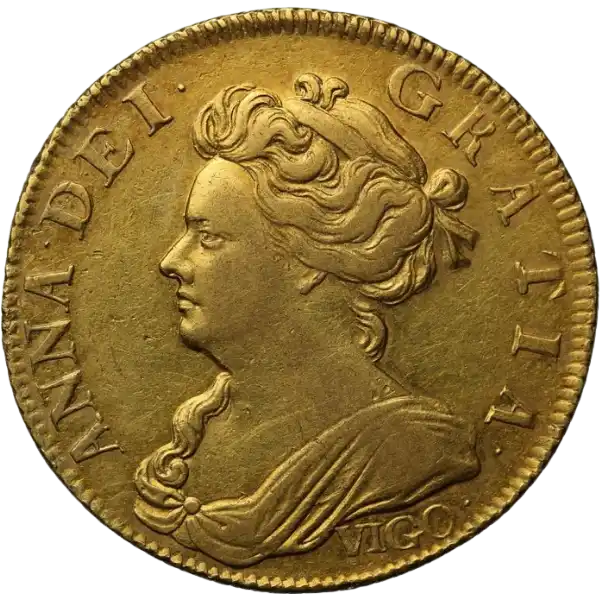
3. The 1703 Queen Anne Vigo Five Guineas: Gold With a Remarkable History
Notable auction sales: $1.08 million (2019) and $900,000 (2024)
Some gold coins derive their desirability from extraordinary historical circumstances.
The 1703 Queen Anne Vigo Five Guineas is a particularly fascinating example.
In October 1702, an Anglo-Dutch fleet attacked a Franco-Spanish fleet at Vigo Bay during the War of the Spanish Succession.
Gold captured during the campaign was subsequently used to produce a small number of British coins bearing the inscription VIGO.
The inscription commemorated the naval victory and established a direct connection between the coins and a significant episode in British military history.
Today, fewer than two dozen examples of the Vigo Five Guineas are believed to survive.
In January 2019, one example sold for $1.08 million, including the buyer's premium, establishing what was then an auction record for a British coin.
Another example achieved $900,000 at an auction in January 2024, significantly exceeding its pre-sale estimate of at least $300,000.
These results demonstrate the importance of provenance and historical storytelling in the rare coin market.
Unlike conventional bullion coins, whose value is primarily influenced by the gold price, exceptionally rare historic pieces can attract substantial premiums because of their significance to collectors.
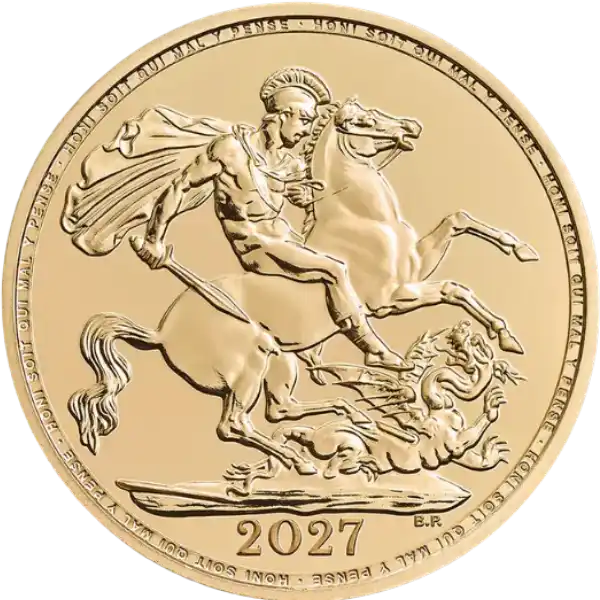
4. The British Sovereign: Over 200 Years of International Recognition
Best known for: Historic popularity, international recognition and an established secondary market
While exceptional auction results attract headlines, commercial success in the gold coin market is not measured solely by record-breaking prices.
Few British coins can rival the Sovereign for its historical significance and international recognition.
The modern Sovereign was introduced in 1817 as part of Britain's Great Recoinage, although the denomination itself dates back to 1489.
Throughout the nineteenth and early twentieth centuries, the Sovereign became one of the world's most recognisable gold coins.
Its reputation extended well beyond Britain, particularly into the Middle East, India and the Mediterranean.
The Royal Mint notes that the Sovereign became known as the chief coin of the world, reflecting its international importance.
One of the Sovereign's most recognisable features is Benedetto Pistrucci's depiction of St George slaying the dragon, a design first introduced in 1817.
The image has become synonymous with British gold coinage and remains instantly recognisable to collectors and bullion buyers.
Unlike the exceptionally rare coins discussed earlier, Sovereigns have historically been produced in substantial quantities.
Their success is therefore measured less by individual auction records and more by their longevity, widespread recognition and continued demand.
Today, the Sovereign remains one of The Royal Mint's flagship bullion products.
Its established secondary market is particularly important for those purchasing physical gold, as familiarity among dealers and buyers can make it easier to obtain competitive resale quotations.
However, individual Sovereigns can also command significant numismatic premiums, particularly when they feature rare dates, mintmarks or exceptional grades.
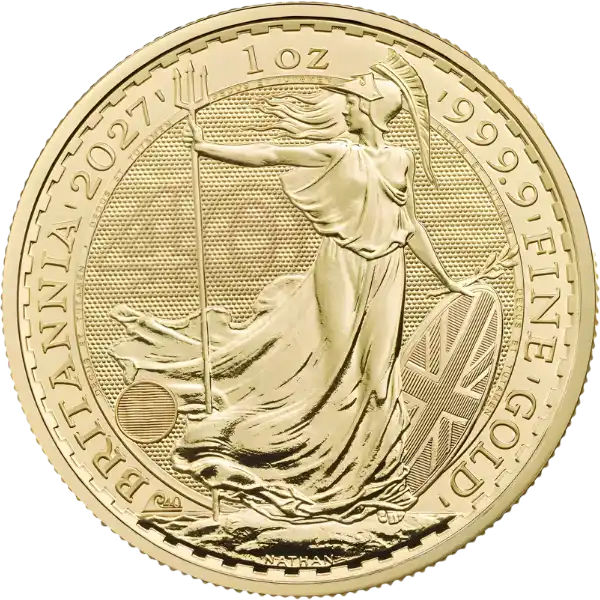
5. The Gold Britannia: Britain's Modern Bullion Success Story
Best known for: Global bullion demand, investment popularity and security features
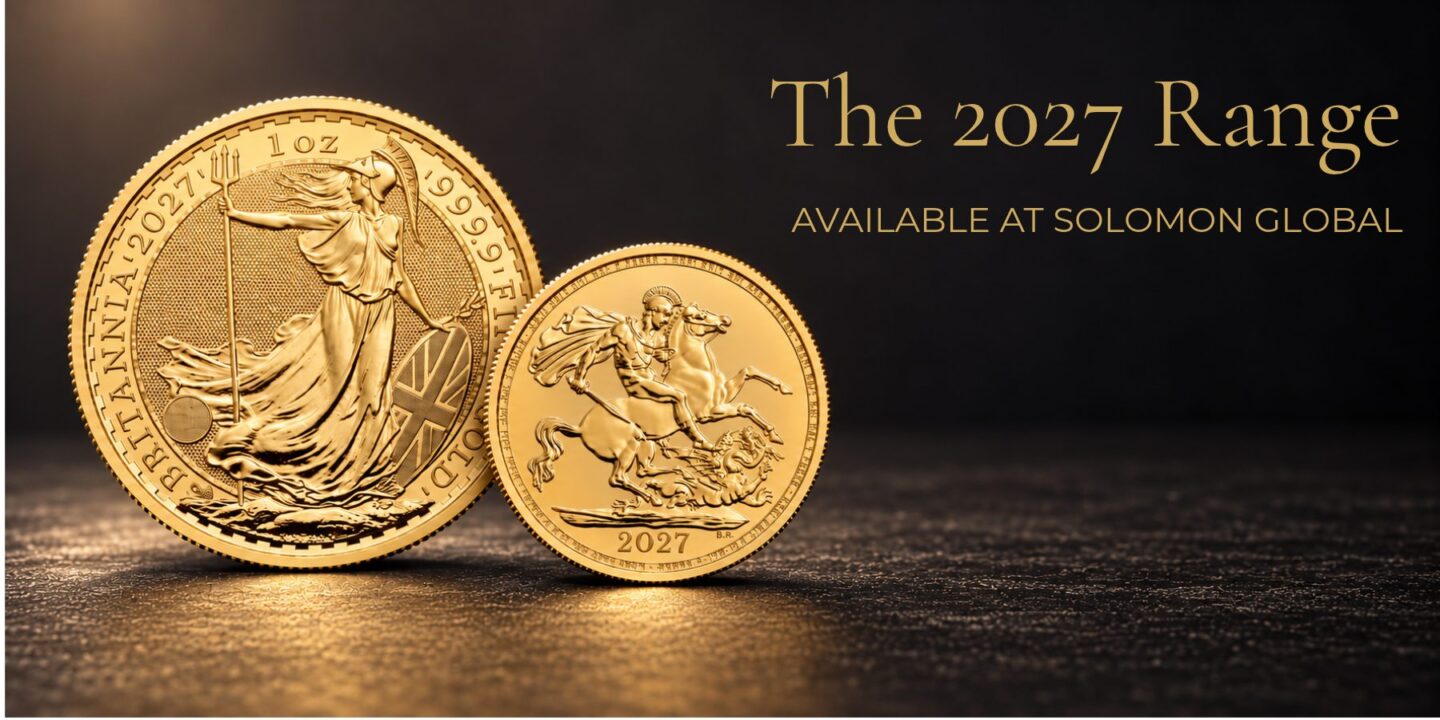
First introduced in 1987, the Gold Britannia has become one of Britain's most commercially successful modern bullion coins.
Depicting Britannia, the female personification of Britain, the coin combines national symbolism with the practical advantages of investment-grade gold.
Modern Gold Britannias are struck in 999.9 fine gold, making them particularly attractive to buyers seeking high-purity physical gold.
The coin's popularity has grown significantly over the decades, supported by its international recognition and developments in anti-counterfeiting technology.
In 2021, The Royal Mint introduced four advanced security features to the Britannia, including a latent image and surface animation.
These features provide additional reassurance to buyers and make the coin more difficult to counterfeit.
According to The Royal Mint, the Britannia has become the world's best-selling bullion coin across its gold and silver ranges.
The Mint also reports that Britannia coins account for approximately 50% of its online bullion sales, demonstrating the importance of the range to its modern precious metals business.
Unlike the Edward VIII Sovereign or Una and the Lion, the Gold Britannia's success is not primarily associated with scarcity.
Instead, its appeal lies in its gold content, recognisable design, security features and established international market.
For buyers whose principal objective is physical gold ownership rather than numismatic collecting, these characteristics can be particularly important.
Buy the 2027 Gold Britannia here.
What Makes a British Gold Coin Successful?
The examples above demonstrate that success in the British gold coin market can take several forms.
For historic coins, rarity and provenance can be enormously influential. A coin associated with a significant monarch, military victory or constitutional event may attract collectors who value its historical importance as much as its gold content.
Condition also plays an important role. Professionally graded coins, particularly those certified by organisations such as NGC and PCGS, can command considerable premiums when their preservation is exceptional.
For modern bullion coins, however, the characteristics that contribute to success are often different.
Buyers may place greater importance on gold purity, recognition, availability and the ability to sell their holdings through an established secondary market.
The distinction between bullion value and numismatic value is particularly important.
Bullion value is primarily determined by the quantity of precious metal contained within a coin and the prevailing market price of that metal.
Numismatic value reflects additional factors such as rarity, historical significance, collector demand, condition and provenance.
Some coins combine both characteristics, although the premium paid for rarity or collectability is not guaranteed to be recovered upon resale.
The Tax Advantages of British Gold Coins
For UK buyers, another consideration is the tax treatment of certain British gold coins.
Gold Britannias and qualifying Sovereigns are recognised as UK legal tender and are generally exempt from Capital Gains Tax for individuals.
Investment gold is also generally exempt from VAT in the UK, subject to the relevant qualifying conditions.
These advantages can make eligible British gold coins particularly attractive compared with certain other forms of physical gold ownership.
However, the tax treatment of a coin should always be considered alongside its purchase premium, resale market and suitability for the buyer's objectives.
Can Modern British Gold Coins Become Tomorrow's Collectables?
The extraordinary auction results achieved by historic British gold coins naturally raise an interesting question: could some of today's limited-edition releases become similarly desirable in the future?
Modern coin collecting has increasingly embraced limited mintages, special finishes, commemorative designs and third-party certification.
Coins associated with historically significant designs, such as Una and the Lion, can attract particular attention because they combine contemporary craftsmanship with an established numismatic heritage.
Likewise, limited-production coins featuring popular British symbols or historically significant themes may appeal to collectors seeking something beyond conventional bullion.
However, scarcity alone does not guarantee future value.
A limited mintage can contribute to collectability, but sustained demand, design quality, condition and broader market sentiment all influence how a coin performs over time.
The historic successes of coins such as the Edward VIII Sovereign and the 1839 Una and the Lion demonstrate the potential significance of these factors, but they should not be interpreted as evidence that modern releases will achieve comparable returns.
British Gold Coins: A Legacy That Continues
From the remarkable rarity of the Edward VIII Sovereign to the enduring popularity of the Gold Britannia, Britain's most successful gold coins demonstrate the extraordinary diversity of the precious metals market.
Some have achieved international recognition through centuries of circulation, while others have become famous because so few examples exist.
The most exceptional historic pieces have attracted seven-figure auction prices, reflecting their significance to collectors and their place in British history.
Meanwhile, established bullion coins such as the Sovereign and Britannia continue to appeal to those seeking physical gold ownership, supported by their recognisable designs, international markets and favourable UK tax treatment.
What unites these coins is their connection to Britain's longstanding tradition of gold coinage, a tradition that continues to influence the modern market.
Discover British Gold Coins With Solomon Global
At Solomon Global, we understand that purchasing gold can mean different things to different people.
Whether you're interested in the established appeal of British bullion coins or the craftsmanship and historical significance of collectable releases, our team can help you explore the options available.
Speak to our team on 020 7123 9248 to discuss British gold coins, current availability and the wider physical gold market.
Important information: Physical gold prices can rise or fall, and past auction results are not indicative of future performance. Collectable coins may carry substantial premiums above their intrinsic gold value. Tax treatment depends on individual circumstances and may change.